English
 한국어
한국어 français
 Deutsch
 Español
 русский
 العربية
 tiếng việt
 Türkçe
 ไทย
ไทย Indonesia

PE protective film, as an advanced protective material, is gradually replacing traditional materials and is applied in every field widely.
PE protective film is a very simple structured polymer organic compound and is now a widely used polymer material in the world. PE protective film uses special polyethylene (PE) plastic film as the base material and is divided into high-density polyethylene protective film, medium-density polyethylene, and low-density polyethylene based on different densities. It is soft, has good adhesion, is easy to peel off, and leaves no residue.
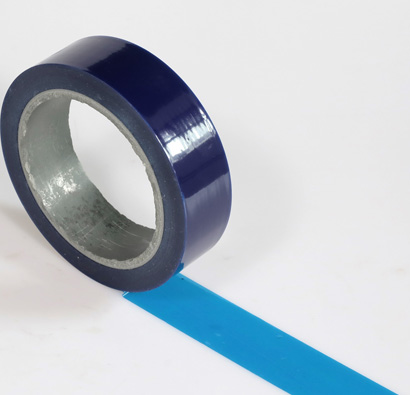
PE protective film can protect products from contamination, corrosion, and scratches during production, processing, transportation, storage, and use, maintaining the original smooth and glossy surface, thereby improving product quality and market competitiveness.
PE protective film's characteristics are as follows:
Wear-resistant/scratch-resistant — Provides long-term protection for many finely processed surfaces;
Impact resistance — Maintains surface integrity in many applications where impact is not very strong;
Puncture resistance — Forms a tough barrier against liquids, preventing them from eroding the product;
Flexibility — Can adapt to most curved shapes;
Non-volatile organic components — Does not release volatile organic components during use.
PE protective film is used in different industries, including:
Hardware industry: Computer casings, galvanized sheet stamping, aluminum plates, stainless steel plates, titanium plates, plastic steel plates, glass plates, solar panels, etc.
Optoelectronics industry: LCD displays, backlight panels, cold light sheets, membrane switches, mobile phone screens, etc.
Plastics industry: PE protective film for plastic PVC sheet, ABS, PP injection products, acrylic sheets, instruments, plastic lenses, surface protection of painted parts, etc.
Printing industry: Surface protection of PVC, PC boards, aluminum plates, films, and other printed nameplates, etc.
Wire and cable industry: Protection of axially mounted copper wires, semi-finished products, finished products, and coiled products, effectively preventing dust pollution, and has anti-oxidation and anti-dirt functions.
Electronics industry: For example, in many electronics factories now, protective films are generally used for finished and semi-finished products during production, making it less likely for scratches and damage to occur on the production line.
PE protective film is different from PET protective film in elongation rate, product material, and product applications.
PE protective film has good extensibility, with an elongation rate ranging from 150-300%, which can achieve different effects for different purposes. In contrast, PET protective film does not have extensibility, is not easily deformed, and has better hardness.
PE protective film's main material is LLDPE, which is relatively soft and has a certain stretchability. Its viscosity varies from 5G-500G depending on usage requirements. PET protective film mainly uses PET material, which is a special polyethylene (PE) plastic film as the base material, divided into high-density polyethylene protective film, medium-density polyethylene, and low-density polyethylene based on different densities.
PE protective film is suitable for surface protection of aluminum-plastic panels, nameplates, metal surfaces, plastic board surfaces, construction and decoration materials, polyester furniture, stone, stainless steel, automotive interiors, aluminum alloys, organic glass, electronics, home appliances, IT, and other industries.
PET protective film, on the other hand, is suitable for TV screens, laptop screens, PDA screens, LCD screens, PSP gaming console screens, electronic dictionary LCD screens, mobile phones, digital cameras, camcorder screens, car DVD displays, GPS LCD protection, etc.
PE protective film is really a practically protective material deserving your choice. Egret Group provides high-quality PE protective film with high performance, suitable for your different needs.